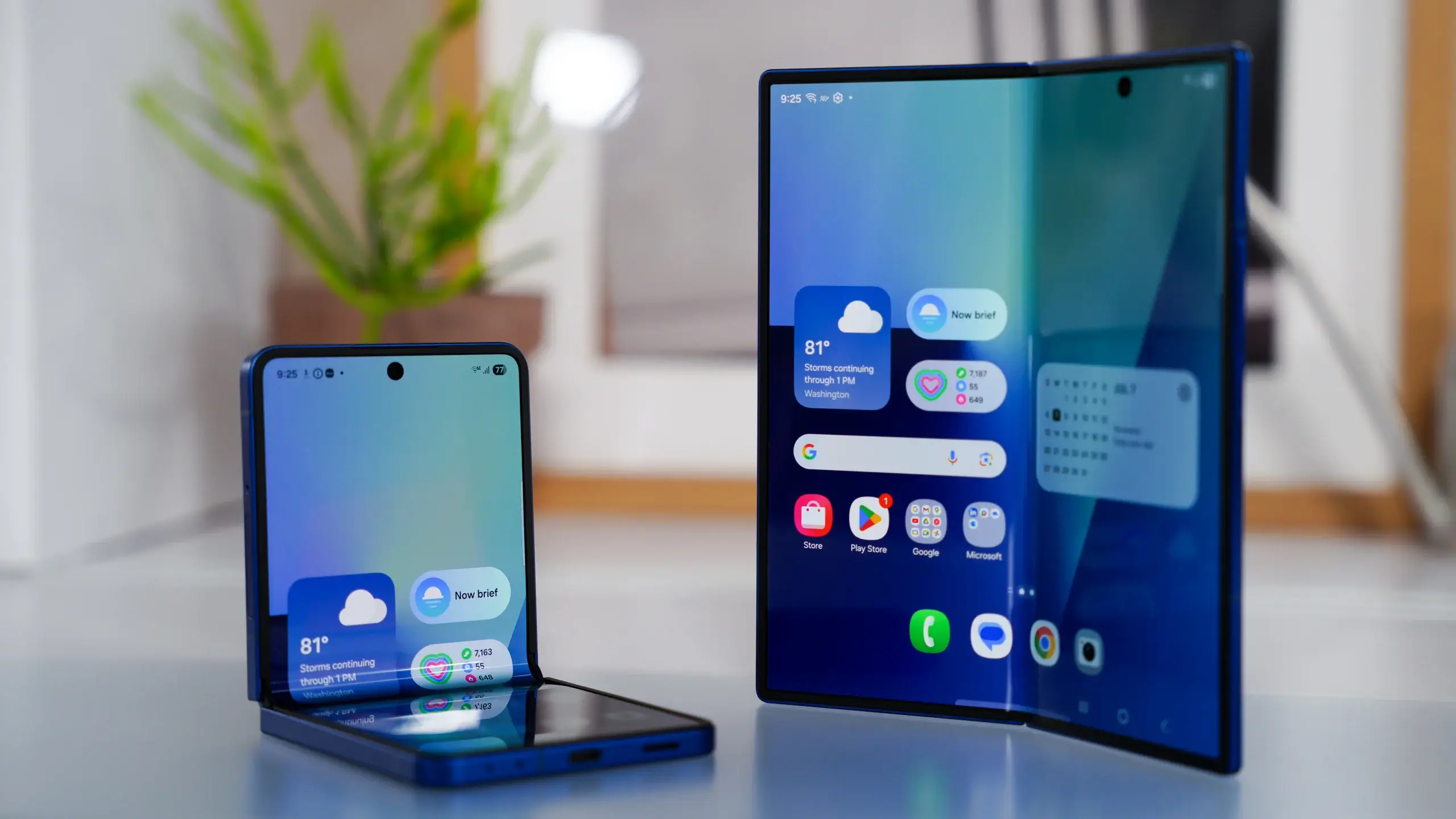
The flip phone was always a gimmick. It was a $1,000 fidget toy for people who missed the year 2004 but couldn't live without TikTok. We fell for the click. We loved the snap. We pretended that folding a standard-sized smartphone in half to make it twice as thick in our pockets was a "feature."
It wasn’t. It was a distraction.
According to the latest industry forecasts, the honeymoon with the clamshell is ending. By 2026, the market for those cute little squares is expected to crater, replaced by the massive, book-style foldables we used to mock for being too bulky. The data is clear: if you’re going to risk a screen crease that looks like a stretch mark, you might as well get some actual screen real estate out of the deal. The "Flip" is fading. The "Fold" is winning.
Let’s be real about why this is happening. The clamshell foldable was a bridge to nowhere. You take a perfectly good 6.7-inch phone, put a fragile hinge in the middle, and charge people a premium for the privilege of having to use two hands to open it. It didn’t solve a problem; it just added a step to checking your notifications. By 2026, consumers are expected to finally stop paying for the nostalgia. They want the "Phablet" back, but this time, they want it to actually fit in a pocket—even if it feels like carrying a literal brick of gold.
The shift is driven by a simple, cold reality: utility. If you’re dropping $1,800 on a piece of hardware, it needs to do more than just look cool at a bar. The report suggests that the 8-inch internal display is becoming the gold standard. We’re talking about devices that actually replace a tablet, or in some desperate cases, a laptop. It’s about the "Pro" user. The person who wants to run three apps at once while sitting in the back of an Uber, pretending to be productive.
The friction here isn’t just the price, though that’s still a punch in the gut. It’s the trade-offs we’ve been forced to accept. To get those massive screens by 2026, manufacturers are still wrestling with the laws of physics. You want a giant screen? You get a battery that drains in six hours because it’s powering a small sun. You want a thin device? You get a camera bump that sticks out like a sore thumb because high-end optics don’t like being squashed.
Then there’s the durability tax. We’ve spent years listening to marketing departments talk about "ultrathin glass" and "optimized hinges." But ask anyone who has owned a foldable for more than twelve months about the "crunch." You know the one. That tiny, terrifying sound of dust getting into the mechanism. Or the way the factory-installed screen protector starts to peel off at the crease like a bad sunburn after six months of heavy use. By 2026, these issues won't be "early adopter" quirks anymore. They’ll be dealbreakers.
The industry is betting that we’ll tolerate the jank if the screen is big enough. They think we’ll ignore the $2,000 price tag if the device unfolds into something that looks like it belongs in a sci-fi movie. And maybe they’re right. There’s a certain kind of ego that comes with unfolding a tablet in the middle of a coffee shop. It says, "I have more money than sense, and I really need to see this spreadsheet right now."
But what happens to the people who just wanted a small phone? They’re being left behind. The dream of the compact, powerful device is being buried under the demand for more pixels and bigger canvases. The report predicts that by the time we hit 2027, the clamshell will be a niche relic, a weird footnote in mobile history like the 3D phone or the modular LG G5.
We’re moving toward a future where every flagship is a heavy, expensive sandwich of glass and anxiety. The industry has decided that bigger is better, mostly because they can’t figure out how to make the small stuff profitable anymore. They’ve realized it’s easier to sell a $2,000 "productivity machine" than a $900 fashion statement.
So, get ready for the era of the mega-phone. Your pockets will be heavier, your wallet will be lighter, and the screen will be glorious—right up until the moment you drop it on a sidewalk.
Are we actually getting more done on these giant pocket-tablets, or are we just finding more expensive ways to scroll through the same three apps?