Samsung is bored. Or maybe they’re just panicked.
Another year, another leak, and another attempt to convince us that the solution to our digital misery is simply more glass to smudge. This time, the breadcrumbs lead to the "Wide Fold," a device that sounds less like a smartphone and more like a tactical error in a game of Tetris. Thanks to a massive One UI 9 leak sourced from a test build out of Vietnam, we now have a pretty good idea of what Samsung thinks our pockets can handle. Spoiler alert: they think your pockets are massive and your bank account is an infinite well of forgiveness.
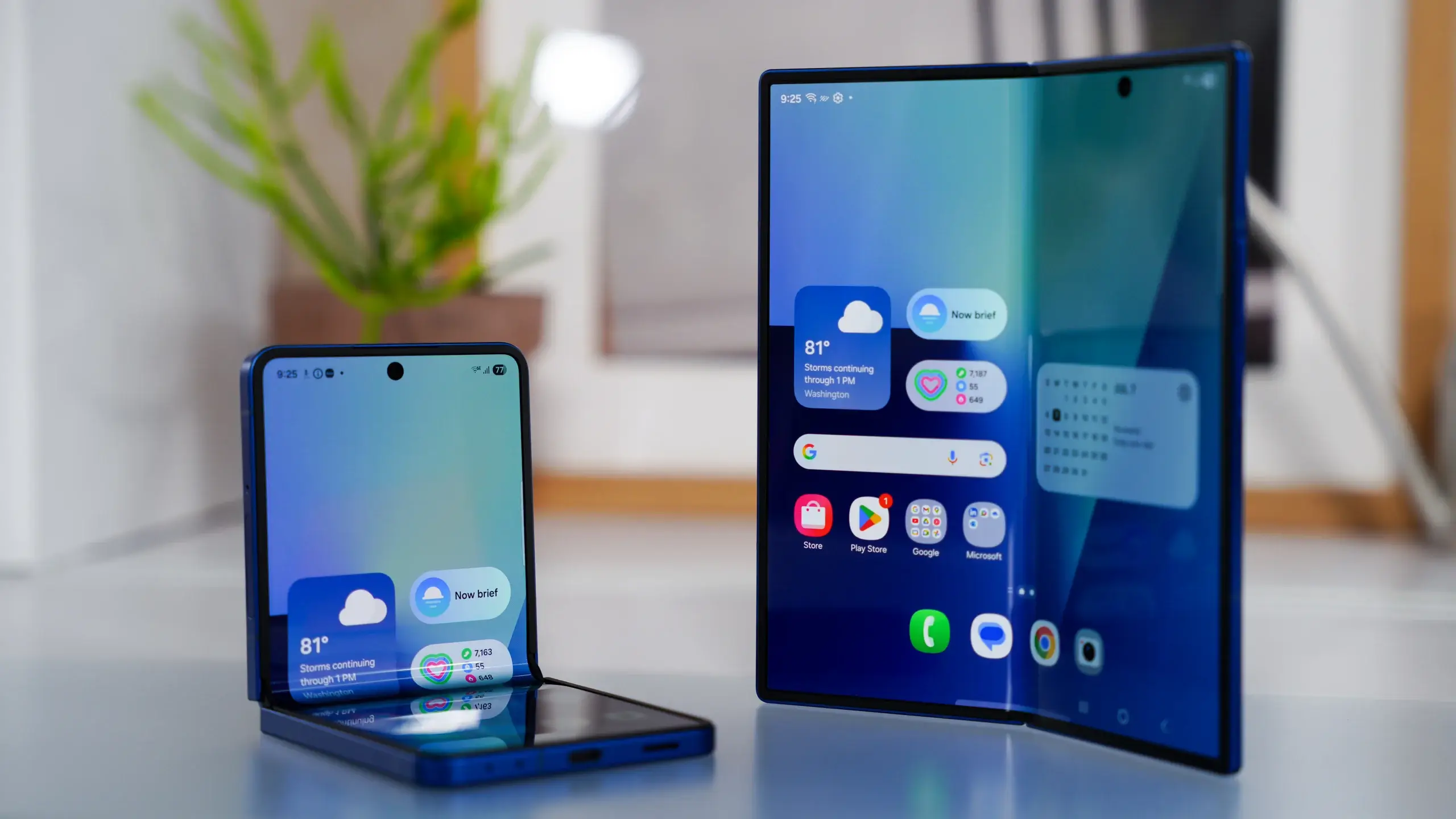
The leaked screenshots of One UI 9 confirm what we all suspected. Samsung isn't fixing the software; they're just stretching it. The interface features a new "Continuity Grid" designed specifically for this wider aspect ratio. It looks busy. It looks cluttered. It looks like a desktop from 2005 trying to survive a mid-life crisis. Samsung’s obsession with putting four apps on the screen at once remains a solution in search of a problem. Nobody actually needs to watch a YouTube video, scroll through a spreadsheet, track their heart rate, and argue on X simultaneously. And yet, here we are.
The hardware is the real punchline. The Wide Fold supposedly ditches the narrow, "remote control" feel of the standard Fold series for a footprint that mimics a passport. It’s a slab. A heavy, expensive slab. Rumors suggest a titanium frame that pushes the weight north of 280 grams. Carrying this thing won’t just be a tech choice; it’ll be a commitment to physical therapy.
Then there’s the friction. The price tag being floated in the supply chain is a staggering $2,699. For that price, you could buy a decent used car, or at least a laptop that doesn't have a visible crease running down the center of its soul. The trade-off is the same one we’ve been making since 2019: durability for novelty. The leak mentions a "Triple-Layer Ultra Thin Glass" (UTG), which is marketing speak for "it’s still plastic at the end of the day." One stray grain of sand in your pocket and your $2,700 investment becomes a very expensive paperweight.
One UI 9 also seems to be doubling down on "Galaxy AI" features that nobody asked for. The leak highlights something called "Contextual Screen Expansion," where the software predicts which part of the screen you aren’t using and fills it with "helpful" widgets. In reality, it’s just more bloatware eating your battery life. Speaking of battery, the Wide Fold is reportedly sticking with a 4,400mAh cell. Powering two massive displays with a battery that size isn't innovation; it’s a dare. You’ll be tethered to a wall by 2:00 PM, staring at your wide, beautiful, dead screen.
Samsung is clearly feeling the heat from the Chinese OEMs. Huawei and Honor are out there making foldables that are thinner than a deck of cards, while Samsung is still iterating on a hinge that feels like it’s grinding coffee beans every time you open it. The Wide Fold is a defensive play. It’s an attempt to reclaim the "Ultra" crown by sheer force of surface area.
But the software remains the hurdle. Android 15 is the foundation for One UI 9, and while Google has made strides in large-screen optimization, the experience still feels like a collection of compromises. Apps still stretch awkwardly. Menus still hide in corners you can't reach with one hand. Samsung’s solution? Add more menus. The leak shows a redesigned "Taskbar 2.0" that stays persistent on the bottom of the screen, eating up precious vertical real estate. It’s a mess of icons and notifications that screams "I have no idea what to do with all this space."
We’re approaching a ceiling with this form factor. You can only make a phone so wide before it stops being a phone and starts being a liability. Samsung wants us to believe that bigger is inherently better, that more pixels equal more productivity. But after a decade of watching them throw everything at the wall, it’s getting harder to ignore the mess on the floor.
So, we wait for the official August reveal. We’ll see the glossy trailers with the synth-wave soundtracks. We’ll see the executives in turtlenecks talking about "the future of mobility." We’ll see the $2,699 price tag and pretend to be shocked.
Does anyone actually want a phone that requires two hands and a belt holster just to check an email?