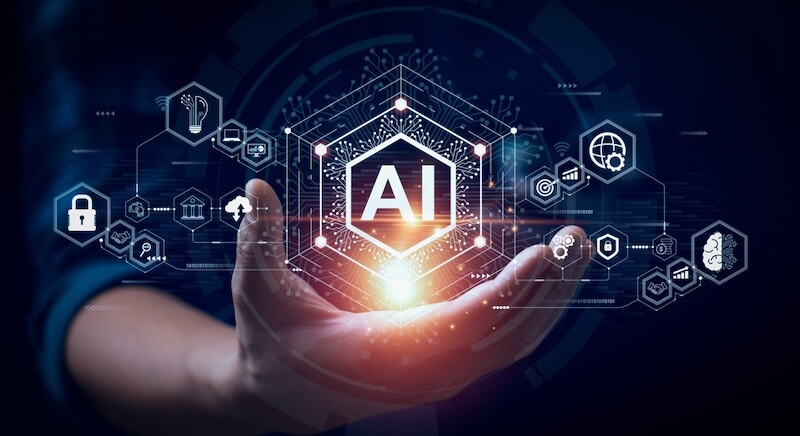
AI coding assistants have rapidly evolved, becoming integral tools in the software development landscape. These AI-powered tools, such as GitHub Copilot, Gemini Code Assist, and Amazon Q Developer, offer features like real-time code suggestions, code generation, and automated code review. While they significantly boost productivity and lower the entry barrier for newcomers, concerns are rising about their potential impact on learning and skill development in programming.
One of the most significant advantages of AI coding assistants is their ability to accelerate code writing. By suggesting entire lines or blocks of code, these tools allow developers to focus more on problem-solving and less on the mechanics of coding. They also assist in understanding unfamiliar codebases, automate repetitive tasks, and even generate code from natural language descriptions. This leads to increased efficiency and faster development cycles, with some studies reporting productivity gains of 20-50%. For instance, Gemini Code Assist can generate and transform full functions or files on demand, and Gemini CLI provides powerful AI capabilities directly in the terminal.
However, the ease and speed provided by AI coding assistants may come at the cost of fundamental learning. A recent study indicated that developers using AI assistance scored 17% lower on quizzes covering concepts they had just used, compared to those who coded manually. This suggests that relying too heavily on AI can hinder the development of a deeper understanding of coding principles. There's a risk of "cognitive offloading," where developers become less engaged with their work and reduce the effort they put into understanding the systems they're building.
The impact is particularly pronounced for novice programmers. While AI assistants can lower the entry barrier by providing suggestions and explanations, they might also prevent learners from grappling with the challenges that are crucial for skill development. Over-reliance on AI-generated code can limit the capacity to conceptualize solutions and problem-solve through critical thinking. Just as relying on calculators can diminish one's ability to perform mental math, relying on AI coding assistants may hinder the ability to write code independently and understand the underlying logic.
To mitigate these risks, it's crucial to approach AI coding assistants as tools that augment human capabilities rather than replace them. Experts recommend implementing strict code reviews and training developers to verify AI output. Encouraging developers to use AI for explanations and conceptual queries, rather than just code generation, can also promote better understanding. Educational institutions and organizations should focus on blending theoretical knowledge with practical skills, using AI to provide instant feedback and simulate real-world coding challenges.
The key is to find a balance where AI assists in accelerating development while ensuring that developers continue to learn and refine their skills. The software development community needs to approach AI assistants with a balanced perspective, harnessing their power to enhance human capabilities rather than replace them. This involves intentional design choices that ensure engineers continue to learn as they work and are able to exercise meaningful oversight over the systems they build.
Ultimately, AI coding assistants are powerful tools that can revolutionize software development. However, their effectiveness depends on how they are integrated into the learning process and development workflows. By promoting a balanced approach that emphasizes both efficiency and understanding, developers can leverage the benefits of AI without compromising their ability to learn and innovate.