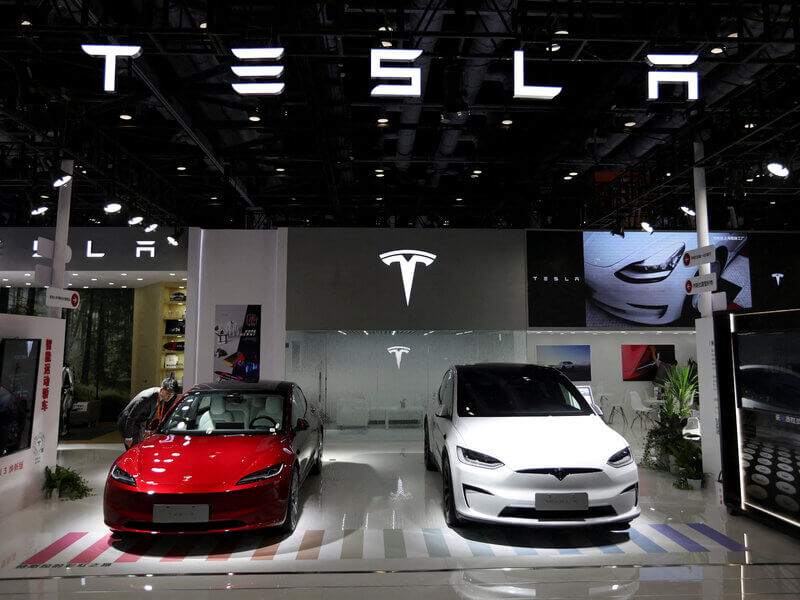
The escalating trade war between the United States and China has taken another significant turn, impacting the automotive industry. Tesla, the leading electric vehicle manufacturer, has reportedly halted sales of its Model S and Model X vehicles in China due to the recently increased tariffs. This decision marks a notable setback for the company in one of the world's largest and most competitive electric vehicle markets.
The move comes as a direct consequence of the ongoing trade tensions between the two global economic powerhouses. In response to the Trump administration's decision to raise tariffs on Chinese goods to 145%, China retaliated by imposing a 125% tariff on US-made products. These tariffs significantly increase the cost of importing Tesla's Model S and Model X vehicles into China, making them prohibitively expensive for consumers.
Tesla's decision to suspend sales of these models reflects the harsh economic realities of the trade war. The increased tariffs have effectively priced the Model S sedan at over 1.26 million yuan (US$172,260) and the Model X SUV from 1.33 million yuan. These prices are significantly higher than those of competing electric vehicles from domestic manufacturers like BYD, Xpeng, Xiaomi and Zeekr, which offer comparable or even superior specifications at more competitive prices.
While the halt in Model S and Model X sales is undoubtedly a blow to Tesla's presence in China, the company still maintains a strong foothold in the market through its Shanghai Gigafactory. This factory produces the Model 3 and Model Y vehicles, which are not subject to the same import tariffs as they are manufactured locally. Tesla will likely focus on promoting these locally-produced models to maintain its market share in China.
The impact of this decision on Tesla's overall sales figures remains to be seen. While the Model S and Model X are high-end vehicles, they constitute a relatively small portion of Tesla's total sales volume. In the first quarter of 2025, Tesla delivered 12,881 Model S, Model X, and Cybertruck vehicles globally, representing less than 4% of its total sales. However, the long-term implications of the trade war and its potential impact on consumer sentiment towards American brands in China could pose a more significant challenge for Tesla.
The situation also highlights the broader risks associated with international trade disputes. Companies that rely on cross-border supply chains and export markets are particularly vulnerable to the effects of tariffs and trade barriers. As the US-China trade war continues to escalate, other industries and companies may face similar challenges, potentially disrupting global trade flows and economic growth.
Tesla's predicament in China underscores the need for a swift resolution to the trade dispute. The longer the tariffs remain in place, the greater the potential for long-term damage to businesses and consumer confidence. As Tesla navigates these challenges, the company may need to explore alternative strategies to mitigate the impact of the tariffs, such as further localization of production or diversification of its export markets.