iPhone 17 Pro: Ditching a Beloved 5-Year-Old Camera Feature - A Step Forward or a Costly Omission?
Apple's iPhone 17 Pro, released in September 2025, boasts a suite of impressive camera upgrades, but one change has sparked considerable debate among users: the removal of Night Mode in Portrait Mode. This feature, available on Pro iPhones since the iPhone 12 Pro in 2020, allowed users to capture stunning portrait shots in low-light environments, combining the blurred background of Portrait Mode with the enhanced clarity and detail of Night Mode. Now, iPhone 17 Pro users are finding that the Night Mode option simply doesn't appear when Portrait Mode is selected.
The omission has left many scratching their heads, as the iPhone 17 Pro's camera hardware seems more than capable of handling both modes simultaneously. Some speculate that the limitation may stem from technical constraints related to image resolution, as Night Mode photos are limited to 12 megapixels, while Portrait photos can be captured at 24 megapixels. Others suggest it could be a software issue or an intentional decision by Apple to prioritize other aspects of image processing. Apple has confirmed the change but has not provided a specific reason for its removal.
The absence of Night Mode in Portrait Mode has a noticeable impact on image quality. Users report that portrait shots taken in low light now appear darker and lack the clarity and detail found in previous iPhone models. This is because the camera can no longer compensate for the lack of light by increasing the exposure time, a key element of Night Mode.
Despite this controversial change, the iPhone 17 Pro brings numerous improvements to its camera system. All three rear lenses—Wide, Ultra Wide, and Telephoto—feature 48MP sensors. The telephoto lens has been upgraded to 48MP, offering up to 8x optical-quality zoom. This allows for smoother transitions between zoom levels and higher-quality images when zooming in. The primary camera module boasts a 48MP sensor with a wide aperture and second-generation sensor-shift optical image stabilization. The ultrawide camera also features a 48MP sensor with a 120° field of view.
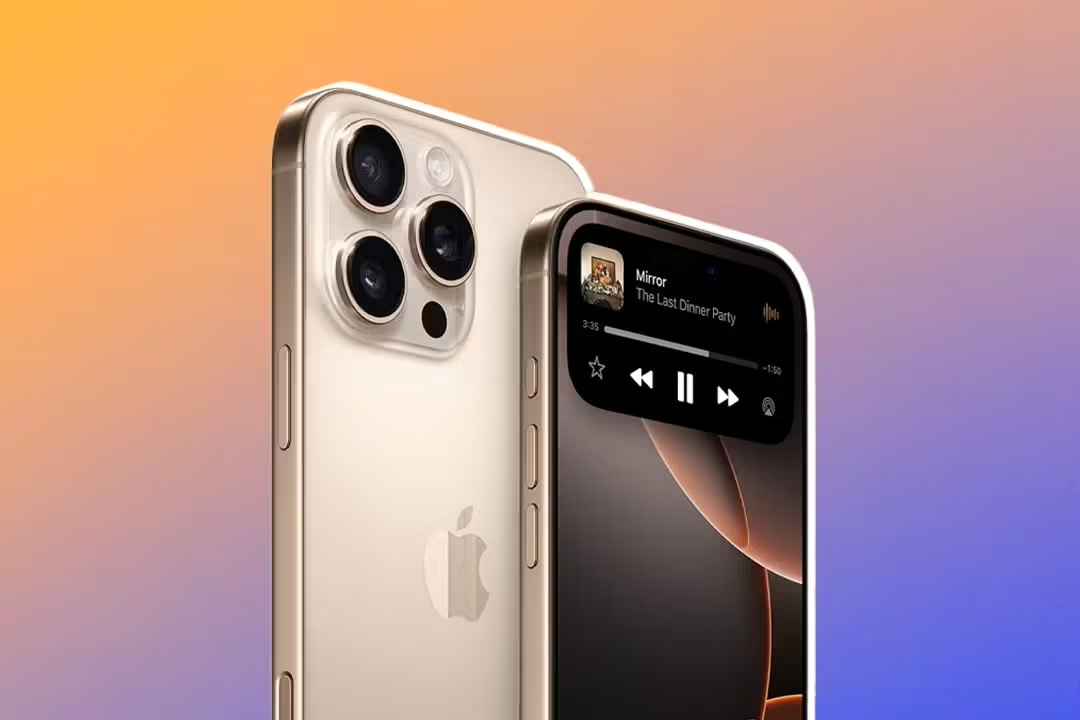
The iPhone 17 Pro also introduces a new "camera plateau" design, replacing the raised square camera section of previous models. The new design covers almost the full width of the device, with the lenses remaining on the left and the LiDAR scanner and flash module moved to the right.
Software enhancements include a new Dual Capture feature that allows simultaneous recording with the front and rear cameras. There's also an 18MP Center Stage front camera that can reframe selfie shots and include multiple people automatically. Apple is also rumored to be working on a new pro camera app with multicam video recording and 8K video recording capabilities.
For photographers, the iPhone 17 Pro offers several compelling features. The upgraded 48MP telephoto lens and the new 8x telephoto provide opportunities to capture fresh perspectives. The new Bright photographic style is also expected to be popular among users.
The removal of Night Mode in Portrait Mode is a puzzling decision that has left some users disappointed. While the iPhone 17 Pro offers significant improvements to its camera system, this omission may be a deal-breaker for those who frequently shoot portraits in low-light conditions. Whether this change is a temporary setback or a permanent shift in Apple's camera strategy remains to be seen.